
You invested in an under-deck drainage system because you wanted dry, usable space beneath your elevated deck. Maybe you envisioned a protected patio area, outdoor storage that stays dry, or just a foundation that doesn’t get soaked every time it rains.
But lately, something’s off. You’re noticing things that weren’t there before. Water where it shouldn’t be. Stains that keep spreading. A smell you can’t quite place.
Here’s the thing about under-deck drainage systems: they don’t fail all at once. They fail gradually, in ways that are easy to dismiss at first. A small drip here. A minor stain there. By the time the problem is obvious, you’re often dealing with damage that’s been building for months or even years.
Knowing what to look for can save you from expensive repairs down the road. Here are five signs that your under-deck system is failing – and what’s actually causing them.

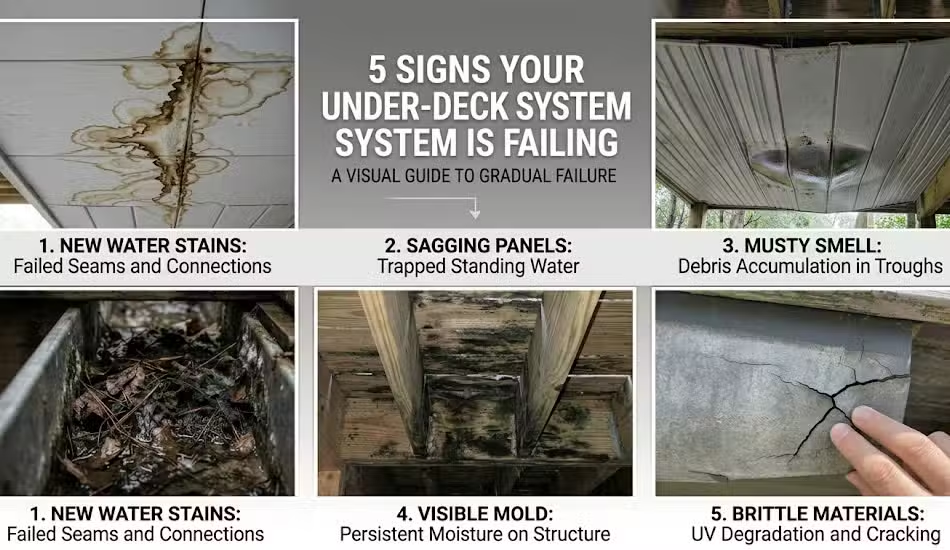
1. Water Stains in New Places
When your system was working properly, water followed predictable paths to the drainage points. Now you’re seeing water stains appearing in areas that used to stay dry. Maybe it’s along the house wall. Maybe it’s in the middle of the ceiling panels. Maybe it’s showing up as discoloration on your patio furniture that you’ve kept in the same spot for years.
What’s happening: The seams and connections in your drainage system are separating. Every panel-to-panel connection, every corner joint, every point where the system meets your house – these are all potential failure points. Temperature swings cause materials to expand and contract repeatedly. Over seasons and years, this movement loosens connections that were once watertight. Water finds the gaps and starts dripping through in new locations.
The pattern matters here. Random, scattered staining usually indicates multiple seam failures throughout the system. Staining concentrated near the house often points to ledger board flashing issues. Either way, once water finds a new path, it keeps using it.

2. Sagging or Warped Panels
Look up at your under-deck ceiling. Is it still flat and uniform, or are you seeing areas that dip, bow, or look wavy? Panels that were once level may now sag in the middle. Sections that used to align perfectly now seem mismatched.
What’s happening: Water is pooling where it shouldn’t. When drainage systems lose proper pitch – either from installation settling or structural movement over time – water stops flowing toward the exit points and starts collecting in low spots. This standing water adds weight, which causes panels to sag further, which creates even lower spots, which collects even more water. It’s a self-accelerating problem.
The longer water sits, the worse things get. Beyond the visible sagging, pooled water promotes mold growth, accelerates material degradation, and can eventually overflow in concentrated streams rather than the diffuse dripping you might expect.

3. Musty Smell Under the Deck
You used to enjoy spending time in your under-deck patio area. Now there’s a persistent musty, earthy smell that doesn’t go away – even when it hasn’t rained in weeks. The odor seems stronger in certain spots and worse during humid weather.
What’s happening: Organic debris has accumulated in your drainage channels and is decomposing. Leaves, pine needles, pollen, seed pods, shingle grit – anything that lands on your deck eventually washes into the drainage system. Unlike gutters, which you can see and clean easily, under-deck troughs are hidden from view. Out of sight, debris builds up, stays wet, and starts to rot.
This decomposing organic matter doesn’t just smell bad. It creates a habitat for mold and mildew, which spreads to adjacent surfaces. It also clogs drainage channels, contributing to the water pooling issues mentioned above. If the smell is strong, the debris accumulation is likely significant.

4. Visible Mold on Framing or Joists
Take a close look at your deck’s structural framing – the joists and ledger board visible from below. Healthy pressure-treated lumber has a consistent color, maybe with some natural weathering. But if you’re seeing dark patches, black streaks, or fuzzy growth on the wood surfaces, that’s mold.
What’s happening: Your framing is staying wet. The entire purpose of an under-deck drainage system is to keep water away from the structural components. When you see mold on joists, it means water is reaching the wood regularly and the wood isn’t drying out between rain events. This can happen from direct leaks dripping onto the framing, from condensation trapped by ceiling panels, or from moisture wicking along boards from a failed ledger connection.
This sign matters more than aesthetics. Persistent moisture leads to wood rot, which compromises the structural integrity of your deck. Fasteners in wet wood also corrode faster and lose holding strength. What starts as surface mold can become a safety issue over time.

5. Faded, Brittle, or Cracking Materials
Examine the panels and components of your drainage system up close. Press on them gently. Do they still feel solid and flexible, or are they stiff and brittle? Look at the color – is it still consistent, or has it faded significantly from its original shade? Check edges and corners for hairline cracks or pieces that have broken off.
What’s happening: UV degradation has broken down the material. Most under-deck drainage systems use vinyl or plastic-based panels. While these materials are marketed as durable, they’re constantly exposed to reflected UV rays bouncing off your deck surface and direct sun at certain angles. Over five to ten years, this exposure causes the material to become brittle, lose flexibility, and develop cracks.
Once materials start cracking, failure accelerates. Hairline cracks become full breaks. Sections that used to seal tightly now have gaps. Components that snapped together firmly become loose. You’ll find yourself patching one area only to have another fail a few months later.
What These Signs Have in Common
Notice a pattern? Every one of these failure modes traces back to the fundamental design of traditional under-deck drainage systems. They attempt to manage water after it passes through your deck surface. That means your framing gets wet first. That means channels, seams, and panels are constantly exposed to water. That means debris, UV, and material fatigue are working against you every day.
The alternative is a system where water never penetrates the deck surface in the first place – where the deck board itself is the waterproof barrier. No troughs to clog. No seams to separate. No water touching your structure at all.
If you’re seeing one or more of these signs, it’s worth asking whether you want to keep repairing a system designed to fail gradually, or whether it’s time to consider a different approach entirely.

Stop managing water after it has already breached your deck and start blocking it at the surface with Admiral SpaceMaker™.
By choosing a solid-core, tongue-and-groove system, you eliminate the very components – troughs, hidden gutters, and ceiling panels – that lead to sagging, clogs, and musty odors. Because SpaceMaker™ uses a co-extruded aerospace-grade silicone seal to create a 100% watertight floor, your joists and framing stay bone-dry, effectively ending the cycle of wood rot and mold growth before it can begin. Instead of a temporary drainage fix that degrades under UV rays and temperature swings, you get a high-performance ASA-capped finish that is warranted against fading, staining, and leaks for decades. Skip the maintenance headaches and the inevitable failure of traditional under-deck systems; switch to Admiral SpaceMaker™ and turn the space beneath your deck into a permanently dry, beautiful outdoor room.