
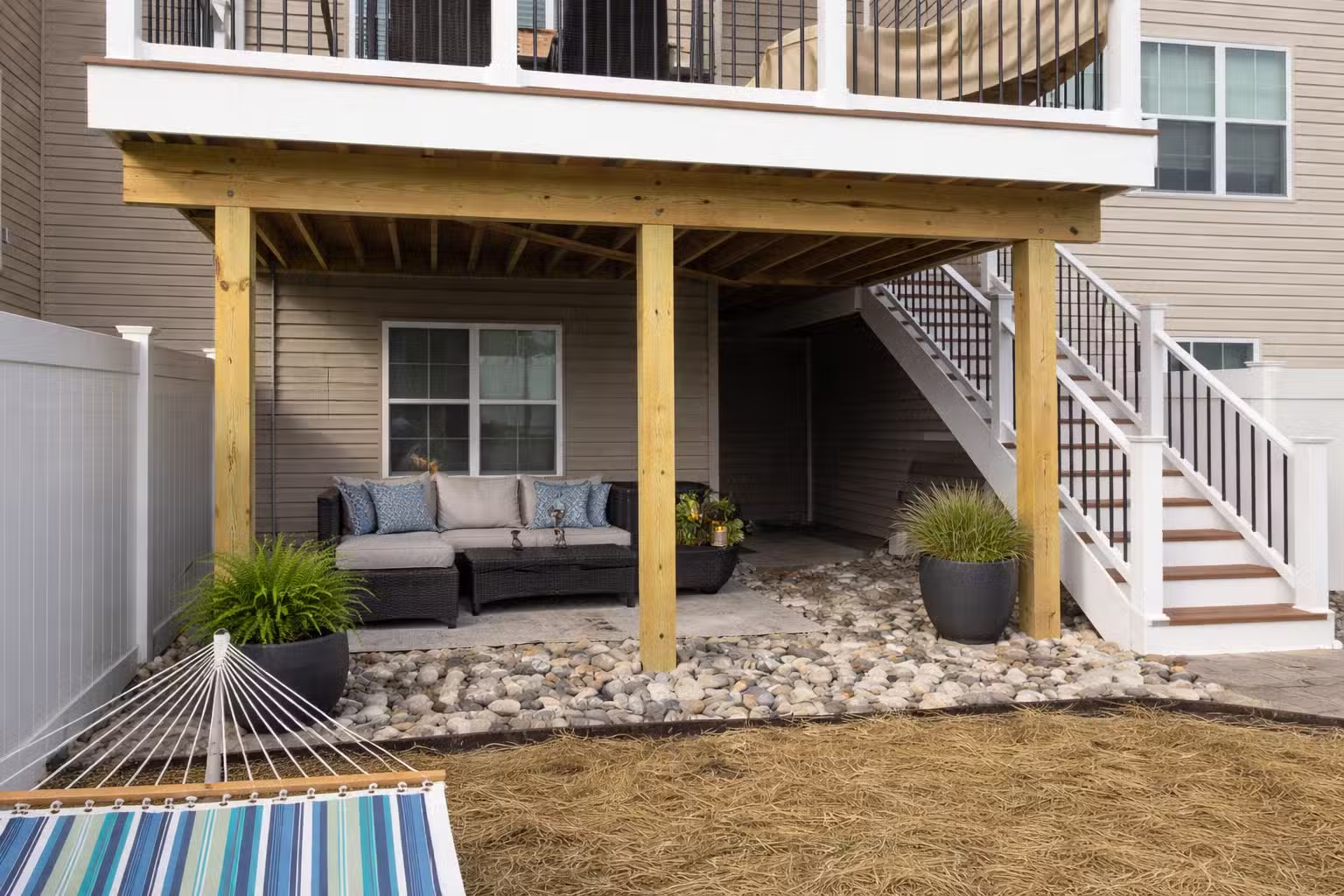
For years, delivering a dry under-deck space meant coordinating multiple products, multiple installation steps, and multiple potential failure points. Deck boards went down first. Then came the drainage system – panels, troughs, gutters, downspouts, flashing, sealants. Two separate systems, two separate skill sets, twice the labor, and twice the callbacks when something inevitably failed.
That’s changing. Contractors across the country are moving away from traditional drainage systems and toward all-in-one watertight decking solutions. The shift isn’t driven by marketing or trends. It’s driven by hard-earned experience on job sites and the business realities of running a profitable deck-building operation.
Here’s why the switch is happening – and why it’s accelerating.
The Callback Problem
Ask any deck contractor about under-deck drainage systems, and the conversation eventually turns to callbacks. Water stains appear six months after installation. Seams separating after the first winter. Homeowners calling because there’s a musty smell they can’t identify. Debris clogs that require climbing into awkward spaces to clear.
These aren’t installation errors. They’re inherent to how traditional drainage systems work. Every panel-to-panel connection is a potential leak point. Every trough is a debris trap. Every component exposed to UV will eventually degrade. Contractors can install these systems perfectly and still face callbacks years later – callbacks that cost time, damage reputation, and eat into margins on future jobs.
All-in-one watertight systems eliminate most of these failure modes entirely. When the deck board itself is the waterproof barrier, there are no separate drainage components to fail. No troughs to clog. No panel seams to separate. Water never penetrates the deck surface, so the problems that drive callbacks simply don’t exist.
Labor Economics Have Changed
The deck-building labor market isn’t what it was ten years ago. Experienced installers are harder to find. Training new crew members takes longer. Every hour spent on a job site is more expensive than it used to be.
Traditional under-deck drainage systems are labor-intensive. After the decking is installed, crews need to return – sometimes on a different day – to install the drainage components. Panels need to be cut and fitted. Troughs need to be aligned with proper pitch. Connections need to be sealed. Flashing needs to integrate with the house. A typical installation adds several hours to the project, sometimes a full day or more for complex deck layouts.
All-in-one watertight decking installs like standard decking. Boards go down, fasteners go in, and the job is done. There’s no second phase. No specialized drainage installation skills required. No return trips to finish a separate system. Crews can complete more projects in the same amount of time, which directly impacts profitability.
For contractors running multiple crews across multiple job sites, this efficiency compounds. Simplified installation means faster training for new team members, fewer scheduling complications, and more predictable project timelines.

Homeowner Expectations Have Shifted
Today’s homeowners do their research before the first consultation. They’ve watched YouTube videos. They’ve read forums. They’ve seen photos of failed drainage systems and asked questions in Facebook groups. By the time they contact a contractor, many already know that traditional under-deck systems have a reputation for problems.
More importantly, homeowners are increasingly asking about alternatives. They want dry space under their deck, but they don’t want to sign up for ongoing maintenance and eventual replacement. They’re willing to pay more upfront for a solution that actually works long-term.
Contractors who can offer all-in-one watertight systems are winning these jobs. They’re not competing on price against contractors bidding traditional drainage installations. They’re competing on value – offering a better solution that commands a premium and delivers higher customer satisfaction.
This positions watertight decking contractors as specialists rather than commodities. Homeowners specifically seeking waterproof solutions find them, often through referrals from satisfied customers. The jobs tend to be larger, the customers tend to be less price-sensitive, and the referral rates tend to be higher.

Warranty and Liability Considerations
When a traditional drainage system fails, the finger-pointing begins. Is it a product defect? An installation error? Improper maintenance by the homeowner? The decking manufacturer blames the drainage system manufacturer. The drainage manufacturer blames the installer. The installer is left managing an unhappy customer while trying to sort out who’s responsible for what.
All-in-one watertight systems simplify this equation dramatically. One product. One manufacturer. One warranty. One point of accountability. If something goes wrong, there’s no ambiguity about where responsibility lies.
This clarity matters for contractors’ liability exposure. Fewer separate components mean fewer potential failure points to be blamed for. Simpler installation means fewer opportunities for installation errors. Clearer warranty terms mean easier conversations when homeowners have questions or concerns years after the project is complete.
Some contractors also report that their insurance carriers view all-in-one systems more favorably than complex multi-component installations, though specific impacts vary by carrier and region.

The Framing Protection Factor
Here’s something contractors understand that homeowners often don’t fully appreciate: the most expensive part of a deck isn’t the surface material. It’s the structural framing underneath. Pressure-treated joists, ledger boards, beams, posts, and all the associated hardware represent a significant portion of the total project cost – and the total replacement cost if something goes wrong.
Traditional drainage systems allow water to contact the framing before diverting it away. Even when working properly, the structure gets wet with every rain. Over years, this repeated wetting and drying cycle stresses the wood, loosens fasteners, promotes mold growth, and accelerates deterioration.
All-in-one watertight systems keep the framing completely dry. Water never penetrates the deck surface. Joists stay dry through every storm. Fasteners don’t corrode from moisture exposure. The structural investment is protected for the life of the deck, not just until the drainage system starts failing.
For contractors who stake their reputation on quality work, this protection matters. A deck that looks great on completion but develops structural issues in five years reflects poorly on the builder, regardless of whether the framing problems were caused by a drainage system the contractor didn’t manufacture.

Making the Switch
Contractors considering the transition to all-in-one watertight systems typically have questions about learning curve, pricing conversations with customers, and supplier relationships. The good news is that most find the adjustment easier than expected.
Installation techniques are similar to standard composite decking. The boards are solid, workable with standard tools, and follow familiar fastening patterns. Most crews are comfortable with the process within their first project.
Pricing conversations shift from defending higher costs to explaining higher value. When contractors can articulate why a watertight system costs more – and why it’s worth more – customers respond. The conversation changes from “why is this so expensive” to “why would I pay less for something that’s going to fail.”
The contractors making this switch aren’t abandoning their existing business. They’re adding a premium offering that attracts better customers, commands better margins, and generates better referrals. For many, watertight decking projects become the preferred work – the jobs they actively pursue rather than the jobs they simply accept.
The under-deck drainage system had its era. For contractors focused on quality, efficiency, and long-term customer relationships, that era is ending.